5 Things to Know About the Fortnite Reload Zero to Unreal Speedrun
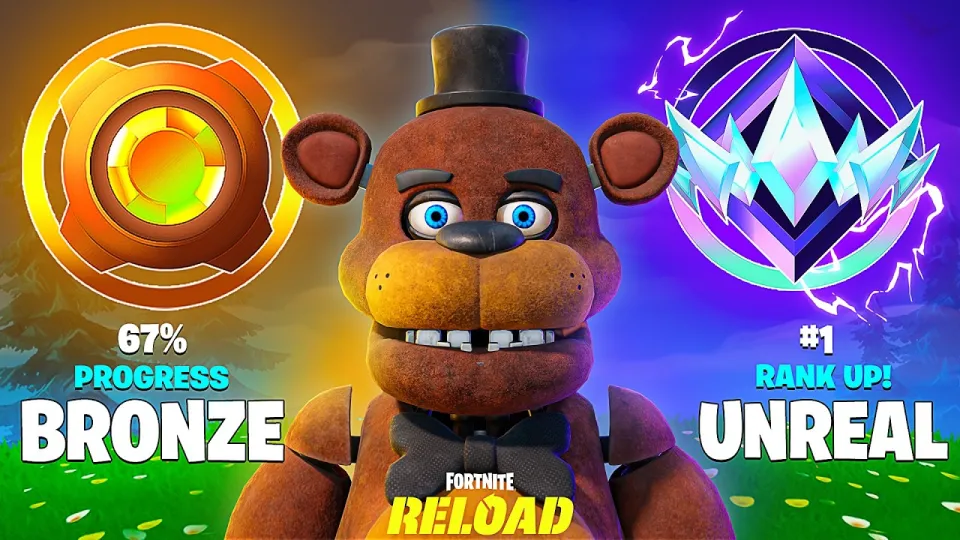
Video: I Played 24 HOURS for UNREAL! (Reload Speedrun on Day 1)
You can order the same kind of articles for your own video to boost it on YouTube and Google. Just message the Telegram bot @sat_sit_bot. Articles with your video embedded are written and posted by the bot itself — on popular topical sites (no ads). Free trial — 50 articles.
· based on the channel TG Plays
Fortnite Reload is a fast, respawn-heavy ranked mode, and climbing from the bottom of the ladder to Unreal in it means grinding placement points and elimination points across dozens of short matches. After Reload ranks reset, TG Plays set out to go from zero to Unreal in a single 24-hour session on day one of the new season, and the resulting breakdown shows what that climb actually costs in time, patience and consistency. You can follow the creator's own Fortnite maps and updates through his Fortnite creator page, where new builds and codes are posted first.
What the Fortnite Reload zero-to-Unreal challenge involves
A zero-to-Unreal run means starting at the lowest tier of Ranked Reload and reaching the highest rank in the same mode without switching playlists. Fortnite's ranked ladder runs through Bronze, Silver, Gold, Platinum, Diamond, Elite, Champion and finally Unreal, and each tier is split into sub-divisions that must be cleared in order. Because Reload ranks reset at the start of a season, everyone begins from the same floor, which is exactly what makes a day-one sprint interesting: the lobby is full of players at wildly different skill levels all climbing at once.
The format matters as much as the rank. Reload is a smaller-squad mode with respawns, so matches are shorter than a standard Battle Royale game and a single bad drop does not automatically end a run. That combination — quick matches plus a second chance after dying — is what makes a 24-hour push plausible at all, even though it is still a punishing amount of play.
How ranked points work in Reload
Ranked Reload awards points from two sources: where you finish and how many eliminations you collect. Placement points scale with the final standings, so surviving into the late game is the reliable way to gain, while elimination points reward aggression and can accelerate a climb when a player is consistently winning fights. The two are not weighted equally at every rank — as the ladder goes up, the game expects better placements and more kills for the same progress, which is why the middle tiers are often where runs stall.
A practical climb looks like this:
- Land in a contested but survivable spot to secure early eliminations without gambling the whole match.
- Play for placement once the first fights are done, because top finishes are the steadiest point source.
- Avoid zero-point games — a cautious mid-table finish beats an early elimination with no kills.
- Track the percentage bar between divisions; the last few points of any tier are where progress feels slowest.
That percentage bar is also where the most common frustration lives. Viewers watching long climbs often fixate on how close a run gets to the next division before a loss drags it back, and the joke about a run stalling at 99 percent is a familiar one in ranked content for a reason.
Why day one of a ranked reset is the hardest window
Day one is the most volatile time to climb because the matchmaking pool has not separated yet. Players who would normally sit in Elite or Champion are mixed with everyone else at the bottom, so early matches can feel far harder than the rank suggests. The advantage is that points come fast when a run goes well: a strong streak on day one can move a player through several divisions before the ladder settles.
The trade-off is stamina. A 24-hour session compresses dozens of matches into one sitting, and performance usually dips in the small hours. Consistency — the same drop, the same rotation, the same fight selection — matters more than highlight plays in a marathon like this, because the goal is net positive points per hour rather than a single spectacular game.
Common questions from players attempting the climb
Players starting their own Reload climb tend to run into the same handful of issues. The first is difficulty: ranked Reload lobbies after a reset genuinely are tougher than they look, because the rank badge no longer reflects who is in the match. The second is pacing — how many matches a full climb takes depends heavily on placement consistency, and a run that averages a top-five finish will get there far faster than one that trades kills for early deaths.
The third is mode choice. Reload's respawn system changes decision-making compared with standard ranked Battle Royale: dying early is less costly, so aggressive opening fights are more viable, but the points still favor players who survive to the end. The fourth is timing. Pushing on day one means facing unsettled matchmaking; pushing a week later means facing a ladder where the top ranks are already occupied by the strongest players. Neither is strictly easier, and the right choice depends on whether a player prefers fast points or stable lobbies.
Where to find TG Plays' Fortnite maps and updates
TG Plays builds Fortnite content through his studio JOGO, and the creator pages are the place to find new maps and updates before they appear anywhere else. The full set of links from the video:
- Fortnite creator page for TypicalGamer — follow for new maps and updates first
- JOGO studio page — the studio behind the builds
- Discord — community and announcements
- Twitter — short updates
- Instagram — behind-the-scenes posts
What the 24-hour Unreal push shows about ranked Reload
The zero-to-Unreal run is a useful stress test of how Fortnite's ranked Reload ladder behaves right after a reset. It shows that the climb is a volume game: short matches, respawns and consistent placements matter more than any single pop-off performance. It also shows why day one is both the best and worst time to try — points come quickly, but the lobby is full of players who are ranked far below their real skill. The video breakdown was put together by TG Plays, who documented the full session from the rank reset to the final push. If you want to try the same climb, start by following the maps and codes on the TypicalGamer Fortnite page so you are playing the current builds.
Key takeaways
- Fortnite Reload ranks reset, sending every player back to the bottom of the ladder and restarting the climb toward Unreal.
- TG Plays attempted a zero-to-Unreal run in Ranked Reload in a single 24-hour session on day one of the new season.
- Unreal is the top rank in Fortnite's ranked system, sitting above Elite, Champion and the rest of the ladder.
- Ranked Reload is a faster, smaller-squad format than standard Battle Royale, so matches end quicker and rank swings are bigger.
- The run was streamed as a full-day marathon, with the video published on October 9, 2026.
Questions & answers
How long does it take to go from zero to Unreal in Fortnite Reload?
It depends almost entirely on placement consistency. A player averaging top-five finishes with a few eliminations per match will move through the divisions much faster than one who trades kills for early deaths. A single-day push is possible but requires many hours of near-continuous play, which is why creators turn it into a 24-hour marathon.
Why is ranked Reload so much harder right after a reset?
Because matchmaking has not separated the ladder yet. Players who normally sit in Elite or Champion start at the bottom along with everyone else, so early lobbies contain a much wider skill range than the rank badge suggests. Difficulty evens out as the season progresses.
Is Reload or standard Battle Royale better for climbing to Unreal?
Reload suits players who want faster matches and can use respawns to take more fights, since a single early death does not end the game. Standard Battle Royale rewards slower, more survival-focused play. The points still favor strong placements in both modes, so pick the one whose pace you can sustain for hours.
What happens if a ranked run stalls just short of the next division?
That is normal near a tier boundary, where the point requirement per division rises and a single loss can erase several matches of progress. The fix is to protect points in those games: play for placement, avoid risky early drops, and take fights only when the odds are clearly in your favor.
Source: I Played 24 HOURS for UNREAL! (Reload Speedrun on Day 1) · Markdown version